

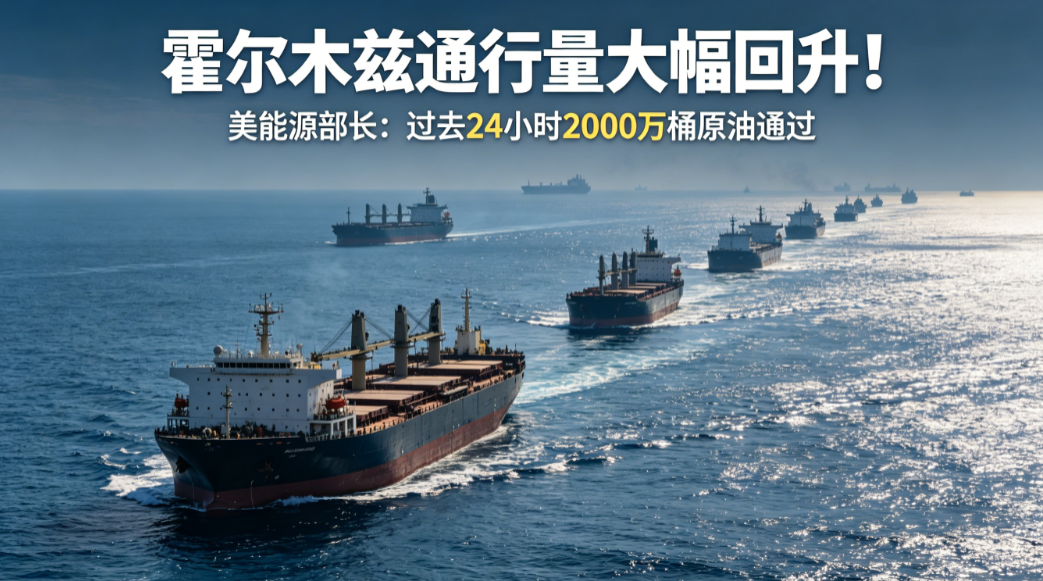
Title: Strait of Hormuz Returns to Normalcy: Oil Flows Resume and Geopolitical Tensions Ease
Keywords: Strait of Hormuz, Iran-U.S. Agreement, Oil Shipping, Global Energy Market, Geopolitics, Oil Prices
Introduction
In a dramatic shift from months of heightened conflict, the Strait of Hormuz—the world’s most critical oil chokepoint—has seen a near-complete restoration of oil tanker traffic following a preliminary agreement between the United States and Iran, combined with progress in Swiss-mediated talks. According to a senior U.S. official, the volume of crude oil transiting the strait has now returned to levels comparable to those before the outbreak of the Iran-U.S. war earlier this year. This development marks a pivotal moment for global energy markets, which had been rattled by the worst oil supply disruption in modern history. The resumption of normal shipping operations not only alleviates short-term supply concerns but also reshapes the strategic calculus in the Persian Gulf region.
The Resumption of Oil Flow: A Statistical Overview
U.S. Energy Secretary Chris Wright, speaking at a global energy forum in New York on Wednesday, provided a detailed account of the strait’s renewed activity. “Over the past 24 hours, approximately 72 vessels have transited the Strait of Hormuz, carrying about 20 million barrels of crude oil,” Wright stated. This volume represents roughly one-fifth of the world’s daily oil consumption—a stark reminder of the strait’s outsized role in global energy security.
Wright emphasized that the strait is now functioning normally. “Today, the traffic flow through the strait is normal,” he said, noting that even if the preliminary agreement signed earlier this month fails to hold, oil shipments would not be halted. This assertion underscores a critical shift in U.S. policy and military posture: the belief that Iran’s ability to close the strait—long considered its most potent asymmetric leverage—has been substantially weakened.
According to trade intelligence firm Kpler, since the U.S. and Iran agreed to reopen the strait last week, approximately 4.8 million barrels of crude oil have been shipped through the waterway daily. This figure is close to the pre-war average, which accounted for nearly 20% of global seaborne oil trade. The rapid return of tanker traffic signals that the immediate logistical bottlenecks have been resolved, though lingering risks remain.
U.S. Perspective and Strategic Implications
Secretary Wright’s remarks carried a clear geopolitical message. He declared that Iran would no longer be able to close the Strait of Hormuz, describing its past ability to do so as a “key bargaining chip” that the United States is now systematically neutralizing. “We are undermining that chip,” Wright said, referencing U.S. naval patrols that have been escorting commercial vessels through the southern part of the strait, within Oman’s territorial waters, to prevent Iranian interception.
The context for this shift is the preliminary agreement reached between Washington and Tehran last week. Under the deal, Iran agreed to allow ships free passage through the strait for a period of 60 days. In return, the United States lifted its naval blockade on Iranian ports. However, the terms beyond the 60-day window remain unclear. President Donald Trump, speaking on Wednesday, made clear that he would find “unacceptable” any final agreement that includes fees or charges related to shipping or maritime activities. This suggests that while tactical progress has been made, the strategic differences between the two nations remain deep.
Wright also revealed that during the period when Iran declared the strait closed last weekend—citing the Lebanon situation—some 17 million barrels of oil were nonetheless transported through the waterway with U.S. naval escort. This indicates that even during heightened tensions, the U.S. military presence ensured a significant, albeit reduced, flow of oil. The implication is clear: Iran’s threat to shut down the strait is no longer credible in the face of sustained American naval deterrence.
Technical Challenges: Mines, Shipping Lanes, and Demining Operations
While the political and military dimensions are encouraging, the practical challenges of restoring full normalcy are not trivial. Secretary Wright noted that many vessels departing the strait are avoiding the main shipping channels due to the presence of naval mines. Instead, they are hugging the Iranian coastline or taking southern routes near Oman, under military escort. “Ship traffic is lower than normal, but each vessel is carrying a larger cargo load,” Wright explained. This shift in shipping patterns has allowed the total volume of oil to approach pre-crisis levels, even if the number of individual transits remains below average.
The mine threat could delay the full renormalization of strait operations. “To return to complete normalcy, the strait needs to be demined, which will likely take several weeks,” Wright said. This statement highlights the lingering physical risks that could disrupt shipping even in the absence of political confrontation. Demining operations, likely to be conducted by coalition naval forces, will be critical to ensuring that tanker traffic can resume using the most efficient and safest routes.
The presence of mines also raises the cost of insurance and shipping, which may have a modest but persistent effect on oil prices in the near term. Nonetheless, the overall trajectory is toward recovery.
Market Response and Future Outlook
The restoration of oil flows through the Strait of Hormuz has had an immediate and pronounced effect on global oil markets. On Wednesday, international benchmark crude prices fell by more than $3 per barrel, dropping to levels not seen since February—before the outbreak of the Iran-U.S. war. This price decline reflects the easing of supply fears that had gripped the market for months. The prolonged conflict had previously caused the most severe oil supply interruption in history, with shipping volumes through the strait plummeting as tankers avoided the war zone.
With more stranded tankers now departing the strait, the supply overhang is gradually being absorbed. Kpler’s data showing 4.8 million barrels per day of crude oil transiting the strait since the agreement suggests that the worst of the crisis is behind us. However, analysts caution that the 60-day grace period creates uncertainty. If no permanent deal is reached, the risk of a renewed shutdown could re-emerge, potentially leading to another spike in volatility.
Moreover, the geopolitical context remains fragile. Iran’s leverage—its ability to threaten the strait—has been reduced but not eliminated. The U.S. has signaled its willingness to maintain a naval presence, but the long-term stability of the region depends on a broader diplomatic resolution. The Swiss talks, which have made progress in parallel with the U.S.-Iran bilateral agreement, could provide a framework for such a resolution, but concrete details remain scarce.
Conclusion
The resumption of near-normal oil shipments through the Strait of Hormuz represents a significant de-escalation of one of the most dangerous flashpoints in the global energy system. The preliminary U.S.-Iran agreement, coupled with tangible military escort operations, has allowed the flow of 20 million barrels per day to return—almost exactly matching pre-war levels. While technical challenges such as naval mines and the uncertain future beyond the 60-day window remain, the immediate crisis appears to be contained.
For the global economy, this development is a welcome reprieve. Lower oil prices will help curb inflationary pressures and support economic recovery in energy-importing nations. For the geopolitical order, the outcome reaffirms the importance of maritime security and the role of naval deterrence in protecting critical chokepoints. As demining operations proceed and diplomatic talks continue, the world will watch closely to see whether this fragile peace can be transformed into a lasting settlement. For now, the oil tankers are once again moving—and that is a powerful signal of hope amidst a turbulent year.
Copyright Notice: This article is original content of Dhaka Bullion. Please contact us for republication permission.

